
Thursday, March 22, 2012
The Real Leadership Lessons of Steve Jobs

Thursday, March 15, 2012
Help Those You Lead--The Magic of Doing One Thing at a Time - Tony Schwartz
If you're a manager, here are three policies worth promoting:
1. Maintain meeting discipline. Schedule meetings for 45 minutes, rather than an hour or longer, so participants can stay focused, take time afterward to reflect on what's been discussed, and recover before the next obligation. Start all meetings at a precise time, end at a precise time, and insist that all digital devices be turned off throughout the meeting.
2. Stop demanding or expecting instant responsiveness at every moment of the day. It forces your people into reactive mode, fractures their attention, and makes it difficult for them to sustain attention on their priorities. Let them turn off their email at certain times. If it's urgent, you can call them — but that won't happen very often.
3. Encourage renewal. Create at least one time during the day when you encourage your people to stop working and take a break. Offer a midafternoon class in yoga, or meditation, organize a group walk or workout, or consider creating a renewal room where people can relax, or take a nap.
Wednesday, March 14, 2012
New Product Development Best Practices
This recent study provides insights on NPD best practices and reinforces the importance of strategy for successful NPD---one of the reasons we spend so much time on it in the Stanford Advanced Project Management Program. Sample factors include:
Strategy
- Goals: Clearly defined, visible to the organization, clearly aligned with organization mission and strategic plan
- Projects and programs are reviewed on a regular basis
- Opportunity identification is ongoing and can redirect the strategic plan in real time
Process
- Common NPD process cuts across organizational groups, is visible, and well documented
- Go/no-go criteria are clear and predefined for each review gate
- NPD process is flexible and adaptable to meet the needs, size, and risk of individual projects
Culture
- Top management supports the NPD process
- Management rewards and recognizes internal “entrepreneurship”
Project climate
- Cross-functional teams underlie the NPD process
- Activities between functional areas are coordinated through formal and informal communication
Research
- Ongoing market research is used to anticipate/identify future customer needs and problems
- Concept, product, and market testing is consistently undertaken and expected with all NPD projects
- Customers and users are an integral part of the NPD process
- Results of testing (concept, product, and market) are formally evaluated
Metrics - Practitioners surveyed could not agree on any consistent best practices for metricsCommercialization
- The launch team is cross-functional in nature
- A launch process exists and project postmortem meeting is held after the new product is launched
- Customer service and support are part of the launch team
Wednesday, February 22, 2012
10 Best Collaboration / Innovation Tools on the Web
Tim Ferriss provides these excellent examples of creative use of the web to support innovation and collaboration.
1. X PRIZE Foundation (www.xprize.org): The X PRIZE focuses on designing and running incentive competitions in the $1M – $30M arena focused on solving grand challenges.2. CoFundos (cofundos.org): cheap and really good platform for the development of open-source software.3. Genius Rocket (geniusrocket.com): solid crowdsourced creative design agency composed solely of vetted video production professionals producing content as a fraction of the cost of a traditional ad agency.4. Amazon Mechanical Turk (mturk.com): popular and powerful crowdsourcing platform for simple tasks that computers cannot perform(yet), such as podcasts transcribing or text editing. There are also companies, like CrowdFlower, that leverage Mechanical Turk (and similar tools) for even more elegant solutions.5. Innocentive (www.innocentive.com): one of today’s best online platform for open innovation, crowdsourcing and innovation contests. This is where organizations access the world’s brightest problem solvers.6. UTest (http://www.utest.com): the world’s largest marketplace for software testing services.7. IdeaConnection (www.ideaconnection.com): open innovation challenge site for new inventions, innovations and products.8. NineSigma (www.ninesigma.com): open innovation service provider, connecting clients with a global innovation network of experts.9. Ennovent (www.ennovent.com): worldwide expert platform seeking solutions for sustainable development in energy, food, water, health and education in rural India.10. TopCoder (www.topcoder.com): the world’s largest competitive software development & creative design community, with over 200,000 at your fingertips.
Thursday, February 9, 2012
How Do You Think About the Future...try MindTime Maps
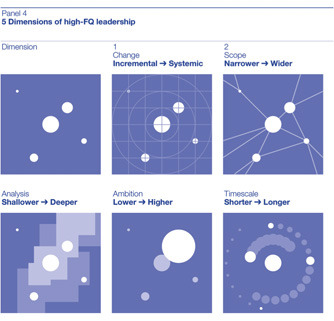
In the daily grind to execute strategies through project-based work, it may seem like the future is too far to matter, especially when innovation is the goal.. A recent study, Future Quotient, provides insights and frameworks that help leaders think how the world will be different in the future, whether for you employees, your customers, your partners.
 Future Quotient, co-authored by Volans and JWT, introduces the Future Quotient (FQ), which is designed to measure our ability to think and act along inter-generational timescales.
The report also included use of a really nifty and innovative technology from my friend, John Furey, CEO of MindTime Technologies. Their technology enables you and your team to create powerful MindTime maps. These are designed to help groups and organizations develop a greater awareness of how thinking about time is shaping and driving people’s roles, decisions, attitudes, and much more.
A simple 2-minute quiz locates people in the world of thinking™. Everybody learns how their thinking is driving their perceptions, communication, and relationships. When you create a MindTime map of your group or organization, you can expand your insights into how thinking is shaping it all by choosing from a menu of pre-prepared surveys on a variety of topics (brand allegiance, innovation, leadership, happiness, etc). These are offered to participants at the time they map their own thinking and results are shown as correlations between thinking archetypes and participant’s responses. See how you and your time rate in thinking about the future at MindTime Maps
The report also included use of a really nifty and innovative technology from my friend, John Furey, CEO of MindTime Technologies. Their technology enables you and your team to create powerful MindTime maps. These are designed to help groups and organizations develop a greater awareness of how thinking about time is shaping and driving people’s roles, decisions, attitudes, and much more.
A simple 2-minute quiz locates people in the world of thinking™. Everybody learns how their thinking is driving their perceptions, communication, and relationships. When you create a MindTime map of your group or organization, you can expand your insights into how thinking is shaping it all by choosing from a menu of pre-prepared surveys on a variety of topics (brand allegiance, innovation, leadership, happiness, etc). These are offered to participants at the time they map their own thinking and results are shown as correlations between thinking archetypes and participant’s responses. See how you and your time rate in thinking about the future at MindTime Maps
Tuesday, January 17, 2012
The Secrets to Successful Strategy Execution: The Idea in Practice - Ilona Steffen, Niko Canner, and Gary Neilson - Harvard Business Review
The Secrets to Successful Strategy Execution: The Idea in Practice - Ilona Steffen, Niko Canner, and Gary Neilson - Harvard Business Review
There are several critical lessons from this company's experience in the Idea in Practice. Here is a preview:
Find a common language. Make sure everyone can talk about the execution issues you face in the same way.
Walk the talk. People at the top of the organization need to believe in the changes and visibly support them so that the rest of the organization is motivated to change behavior.
Focus on both organizational and behavioral changes. It is more effective to change both rather than focusing on one or another.
Know your organization. There is no one-size-fits-all approach to improving an organization's ability to execute. You must find what works for you.
Subscribe to:
Posts (Atom)